

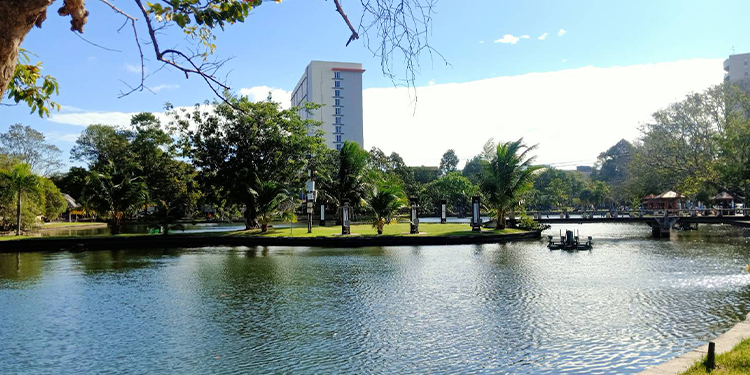
Water conservation program and implementation (WR.1)
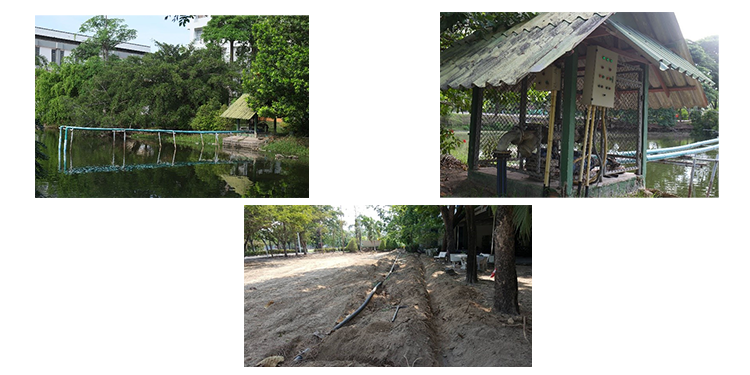
- 1.The Faculty of Engineering has a rainwater harvesting system for watering plants.
(Burapha university, Thailand)
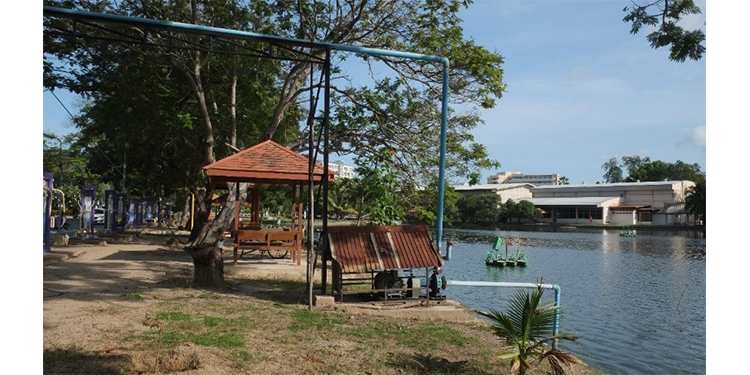
- 2.Burapha University pumped the water from the rain harvesting in the park to be used for watering the plants around the campus. (Burapha university, Thailand)
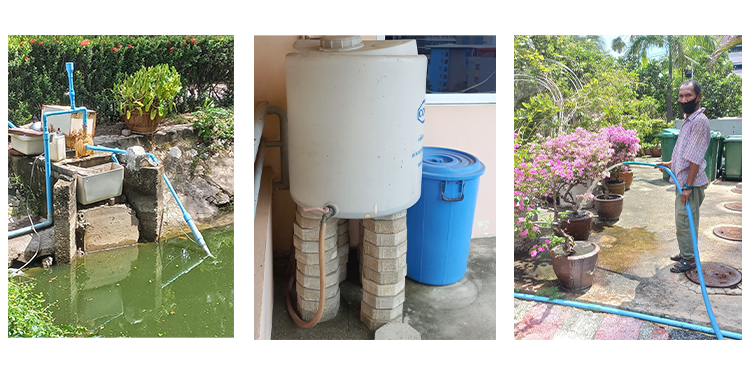
- 3. Central Library of Burapha university has the measures to conserve water by using the water in the pond to water the plants. In addition, the water from the tank from the condensate drain of the air conditioner is used for watering the plants on the balcony. (Burapha university, Thailand)
Water recycling program implementation (WR.2)
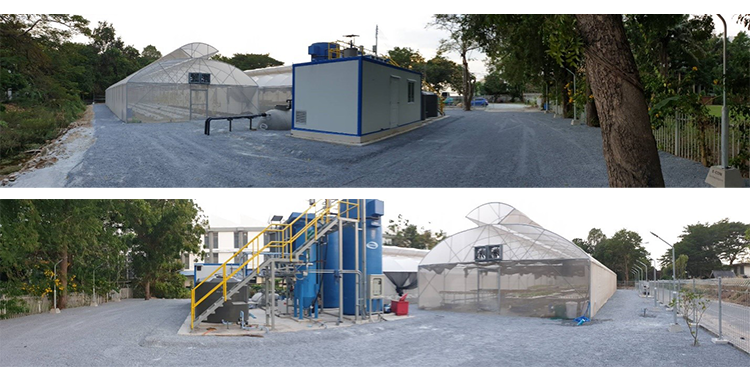
- In 2020, Thailand Science Research and Innovation (TSRI) has funded research projects “The Center for Learning and Transferring Water Management with Treated Water” was developed as a model demonstrating guidelines for utilizing treated water in water usage activities. The project chooses the plant farm system that brings water-saving innovations to help reduce water usage. The aim of this project was the efficiency of water treatment testing and agricultural models that reduce water planting.
From the conditions of the Eastern Economic Corridor (EEC) that have limitations in the development and improvement of water reservoirs. This makes a 3Rs (Reduce Reuse and Recycle) water reuse model and wastewater treatment from building to be recycled have lower cost than using water produced from the water supply system or a new water source. In additional, it can also be developed for limited spaces. It is more flexible than developing a large system which is more complicated and conditional.
As for the water-saving farm system, it can show the efficiency of planting with reduced water usage, productivity control to increase productivity and reduce the worker to cultivate. The prototype and knowledge by this project can also be used to disseminate knowledge to both government and private agencies, students, students and interested parties in order to raise awareness of the benefits that will be gained from using the prototype and the project ideas to apply in their activities. This is the objective that causes the project's achievement to be expanded to the public.
This will help to reduce water use in the EEC. The project consists of 2 parts: the first part has the model farms of the melon/tomato plant (800 plants) and the organic vegetable plant (6,000 plants) and the 2nd part is a moving bed biofilm reactor (MBBR) wastewater treatment system that size of 30 cubic meters/day (or 1.25 cubic meters/hour)
Water efficient appliance usage 200 (WR.3)
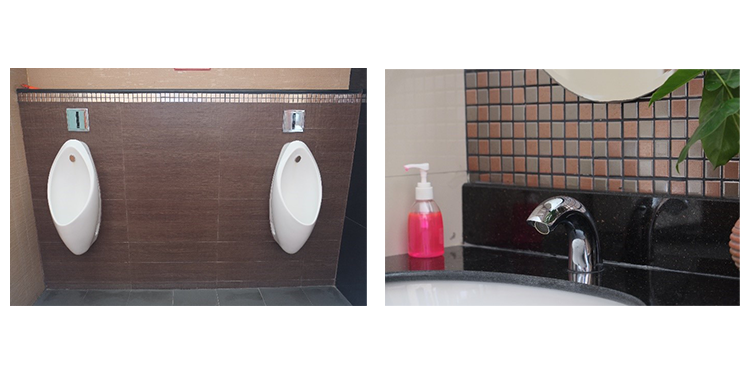
- The water efficient appliances conservation measures include, cistermisers (automatic control of urinal flushing) and automatic taps. The appliances has initial to be installed in the Office of the president building and will be expanded to other buildings on campus.
Treated water consumed (WR.4)
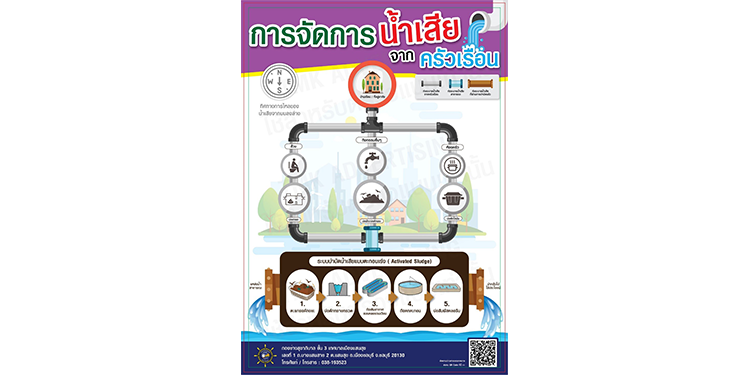
- Burapha University manages wastewater from within the university directly to the wastewater treatment plant of Saensuk Municipality. The Saensuk Municipality will treat the water in 2 parts, the first part is the treatment for releasing to natural water sources and the second part is the water for use within the university as show in figure above.
Percentage of additional handwashing and sanitation facilities during Covid-19 pandemic (WR.5)
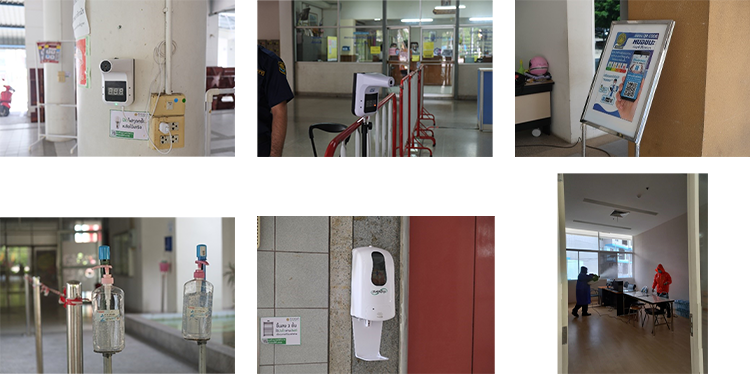
- Burapha University has taken various programs in order to prevent the epidemic Covid-19 as follows:
- Use the “Mor Chana” application for scanning barcode to check in
- Wear a mask and social distance
- Temperature detector
- Wash hands with clean water and alcohol gel
- Burapha University has donated a Negative Pressure fan filter/UV-C UNIT to hospitals
for making negative pressure room to disinfect. Nowadays, Burapha university has been produced and distributed to hospitals and certified safety standards from SHEQ Co., Ltd. (SHEQ Co.,Ltd.)
| Facilities | Number of Facilities |
|---|---|
| Disinfectant Electric/Fog Machine | 4 |
| Handwashing Facilities (manual and automatic) | > 76 (prepared more than one for all buildings) |
| Body temperature detector | 76 (placed at the entrance of all buildings) |