
Waste
Recycling program for university waste (WS.1)
- Program to reduce the use of paper. The departments in Burapha University realize the valuable use of paper.
1. The contents of the document are checked before printing every time. And print only the necessary documents to cause unnecessary waste paper.
2. The campaign to use reused paper or printing double-page documents to reduce the use of paper.
3. Electronic documentation system communication programs through various activities such as meetings online training e-meeting, using e-document.
4. Program to reduce the use of plastic. The campaign to use reusable containers such as food boxes, cutlery, personal tumblers and reusable bag to reduce the use of disposable plastic boxes, cutlery, plastic glasses and plastic bag and prepared free water distribution for staffs and students.
Program to reduce the use of paper and plastic on campus (WS.2)
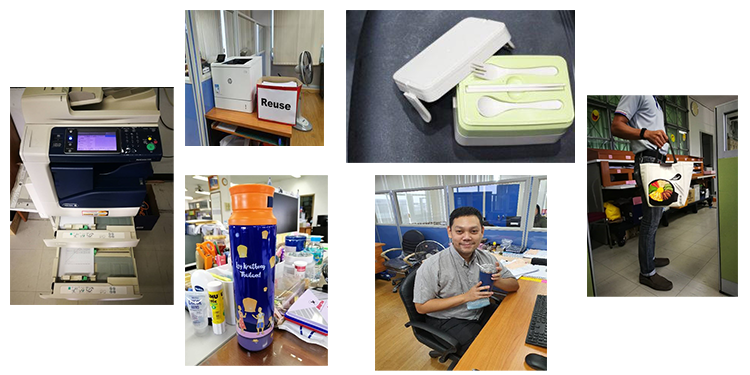
- Program to reduce the use of paper. The departments in Burapha University realize the valuable use of paper.
1. The contents of the document are checked before printing every time. And print only the necessary documents to cause unnecessary waste paper.
2. The campaign to use reused paper or printing double-page documents to reduce the use of paper.
3. Electronic documentation system communication programs through various activities such as meetings online training e-meeting, using e-document.
4. Program to reduce the use of plastic. The campaign to use reusable containers such as food boxes, cutlery, personal tumblers and reusable bag to reduce the use of disposable plastic boxes, cutlery, plastic glasses and plastic bag and prepared free water distribution for staffs and students.
Organic waste treatment (WS.3)
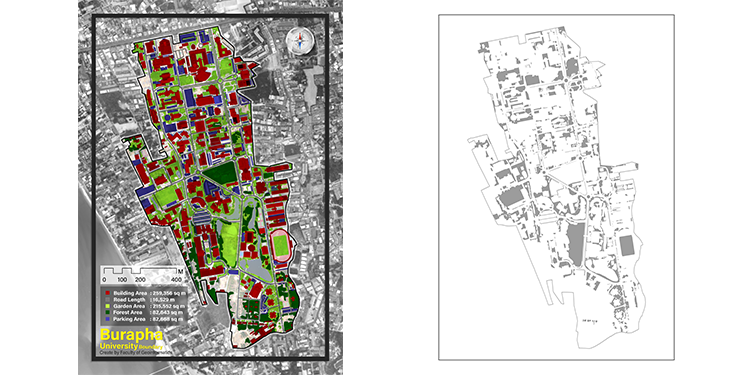
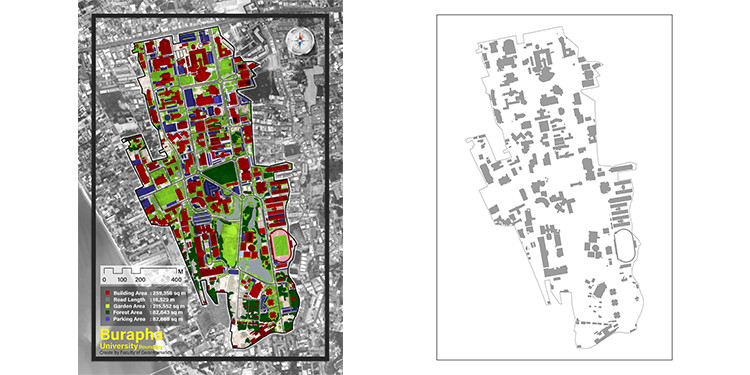
- Total area on campus covered in planted vegetation: 215,552 m2
The percentage of the area on campus covered in vegetation in the form of forest to the total campus area is 21.3%
Inorganic waste treatment (WS.4)
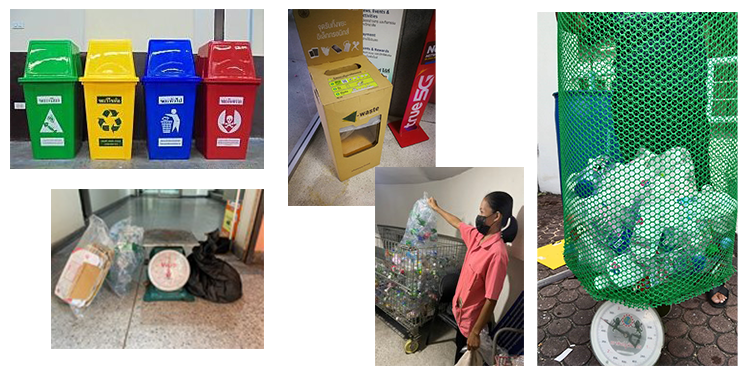
- The inorganic waste in the Burapha University was separated by waste sorting system. The recyclable waste was weight and sent to factories for further recycling process. The University has set up a bin for storing electronic waste.
The procedure of inorganic waste treatment follow:
1. Purchasing clear trash cans screen waste classification such as green is general waste and yellow for waste recycling
2. Assign housekeepers on every floor weigh wet garbage and recycled waste on every floor
before being disposed and taking notes according to the form provided.
3. Evaluate the proper disposal of rubbish every month and take the result to improve and implememt.
4. The waste that has been sepaprated and weighed by the housekeeper company to manage the waste management system outside the university
Toxic waste treatment (WS.5)
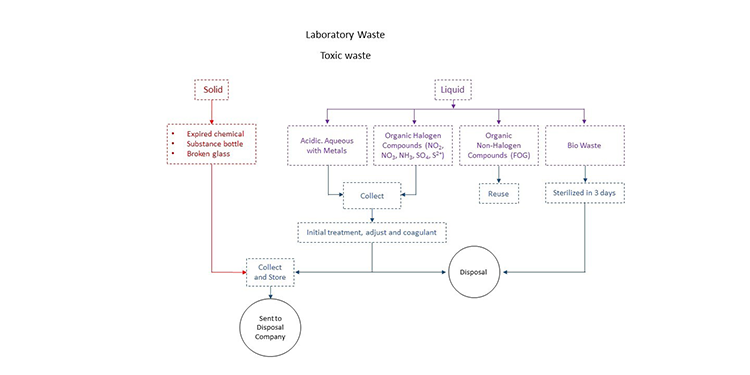
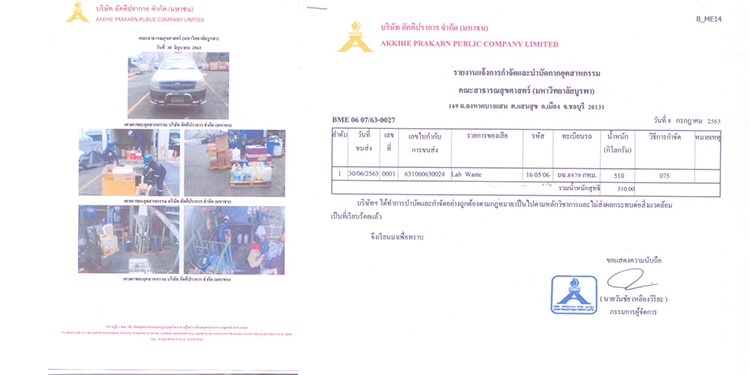
- Laboratory toxic waste treatment procedure
Disposal of waste information Waste to be classified into 3 types as follows:
1. The solution contains heavy metals. Total disposed volume of 300 liters
2. Broken glass fragments Total disposed of 100 kg.
3. The material is contaminated heavy metal. Total disposed of 100 kg.
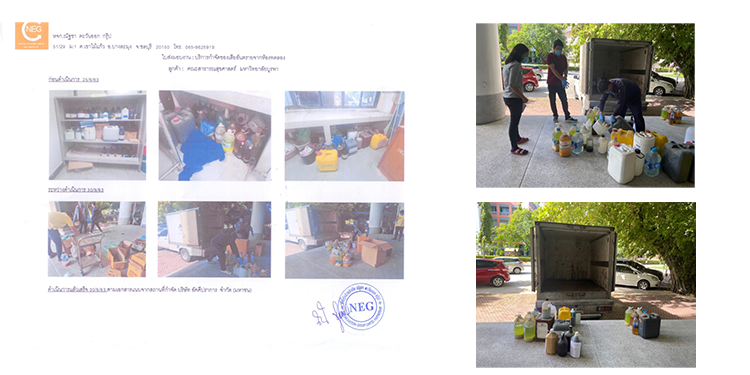
- At the Faculty of Allied Health Sciences, the management of (solid/liquid) hazardous waste is directed by Akkhie Prakarn Compant Limited. The staff collect the toxic waste from laboratory research, then segregate the toxic waste according to the type specified by the company. The company take and dispose in the correct way.
Sewage disposal (WS.6)
- Percentage of university budget for sustainability efforts